Inclusive Recruitment – Resource Page
If you attended our Inclusive Recruitment workshop, this resource page is for you!
‘Inclusive recruitment is a hiring process that focuses on creating equitable opportunities for all candidates, regardless of their background, gender, race, disability, or any other protected characteristic, aiming to build a diverse and inclusive workforce.’
Some of the benefits
Hiring more talents: Inclusive hiring ensures talented people are not turned down because of their diverse characteristics
More innovations: Studies show that companies with above average diversity are 19% more innovative.
Better business outcomes: Ethnically diverse companies are 33% more likely to have higher profits.
‘Diverse organisations outperform homogenous organisations, as well as evidencing higher staff retention and innovation’
Harvard Business Review, Deloitte Insights, University of Sheffield
Recruitment Journey
We followed a recruitment journey from start to end looking at the impact that non inclusive behaviours can have. We looked at ways to make the process more inclusive and reflected on what we could implement in our own recruitment process.
The Beginning…
We watched Ashley and Robyn discuss a vacancy that needed to be advertised, there are disagreements about best practice, as well as the experience and qualifications needed for the role. Internal candidates are mentioned as well as changing the role and bringing in an apprentice. The places the role is advertised is also discussed. The scene ends with the creation of a job breakdown to be advertised, which on the surface, the team are happy with, but which is ultimately non-inclusive.
We had the opportunity to meet the character and get to know some of the pressures they are currently facing in the workplace that may account for some of their behaviours/reluctance to discuss options more openly.
Expectations VS Reality…

Through Tom we were able to see the impact the advert had on him versus the expectations he had been led to believe previously, which were very different to the reality. We then saw his impression of the company and his current role as a result.
Things to consider to ensure your reality sits in line with expectations you are setting:
Succession planning, current talent pool and talent mapping
Considering the role
Are we delivering the ‘reality’ we say we are? The Culture?
Staff Turnover- The cost
The Language We Use…
Through Sharla we were able to see the impact language can have on potential candidates and the impact that can have on their impression of the role or company itself.
We discussed research on the impact of language and what to consider. We also looked at the impact of language on us and how we interpret it.
A guide for best practice / language and bias :
Agentic and communal language. Utilise gender neutral alternatives.
“Gender researchers often discuss the differences between agentic and communal language and behaviours. To be agentic is to be confident and decisive; to be communal is to be warm and helpful. In many countries, including seemingly progressive ones, men are still perceived as more agentic, while women continue to be viewed as more communal.” Adunza research
Look at ‘Go to’ words/descriptions – are there any buzz words that get used without thought? Consider bias including age etc.
Get second opinions on Job descriptions/adverts etc
Shortlisting and Bias…
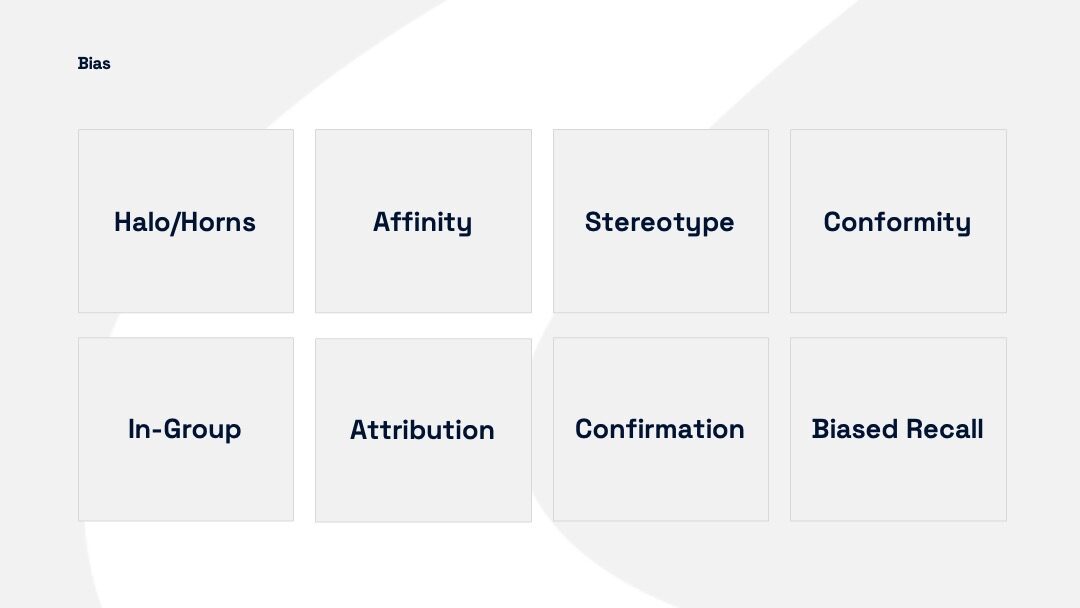
We saw our panel shortlisting candidates whilst often refencing not wanting to be bias. One of the biggest effects of bias is prejudgment, which can result in discriminatory practices. As some biases can be helpful and are used in heuristic decision-making, it is important to find the balance between helpful biases and negative, prejudicial biases.
Challenging Bias
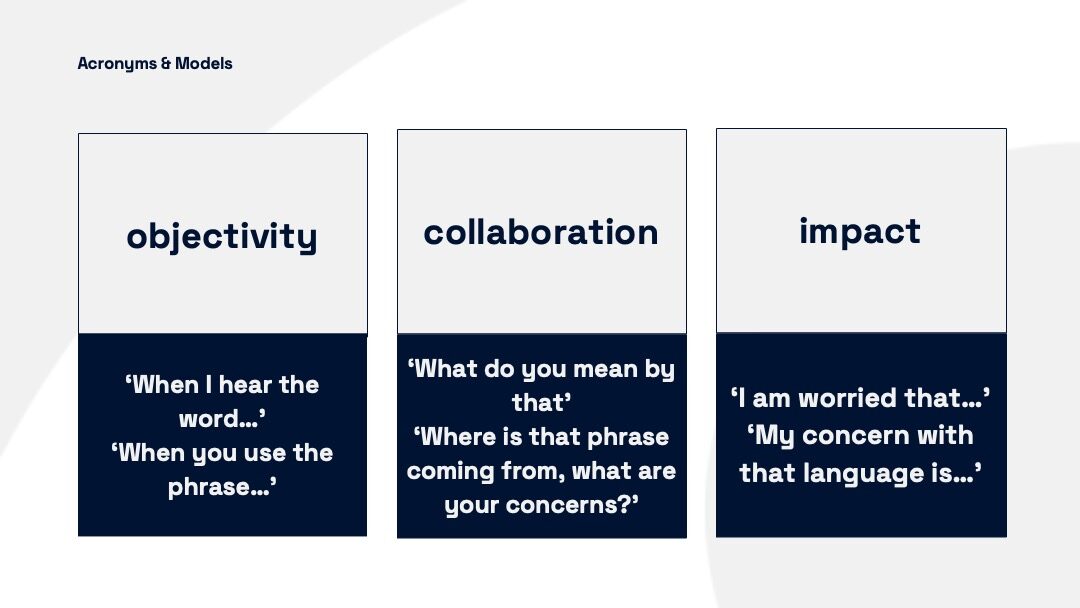
Challenging bias can be difficult as we saw when Robyn attempted to challenge Ashley. It can often lead to defensiveness and or anger. We saw more success challenging bias when pillars of challenge were used.
Pillars of challenge
Always challenge the behaviour, not the person
Always challenge on behalf of self
Invite collaboration
Reasonable adjustments
Through our candidate David we identified that reasonable adjustments are key to inclusive recruitment and an inclusive workplace.
The five factors that deem an adjustment as reasonable:
Practicality
Cost
Organisational resources and size
Availability of financial support
Impact that said adjustment will make upon the disabled person’s working environment.
The Interview…
We saw Alex in her interview and had the opportunity to ask questions we felt had been missed.
We also saw the impact on Kane of a interview process that was biased and not inclusive.
Value based questions
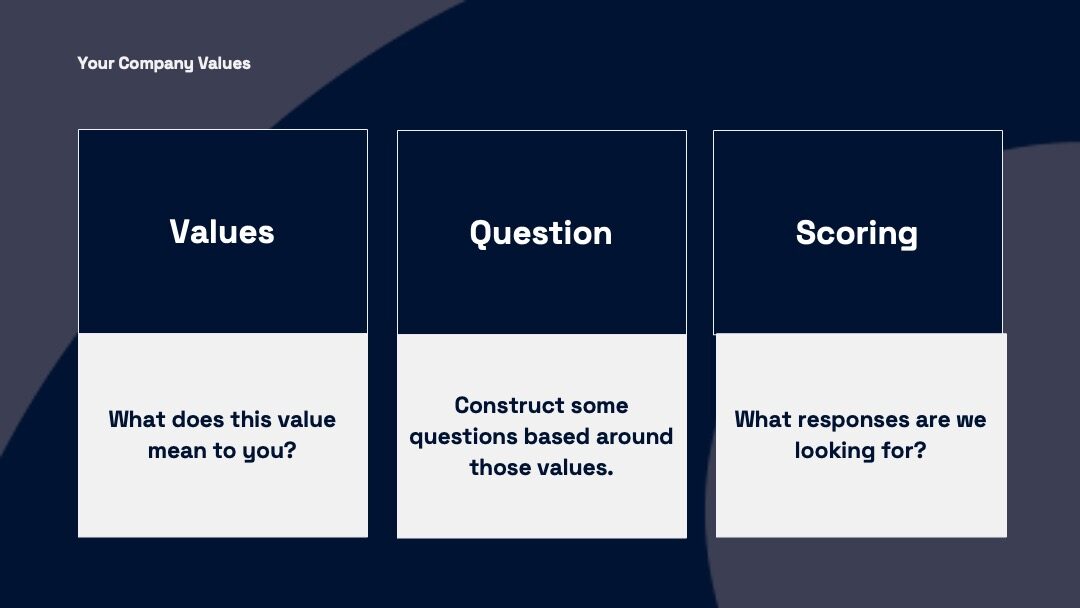
We looked at your company values and the benefits of value based questions. We discussed:
What does that value actually mean to you?
What questions would we ask linked to this value?
What are we looking for in a candidates response?
📢 External Resources
The following are provided for extra, continual learning about inclusive recruitment
https://www.cipd.org/uk/knowledge/guides/inclusive-employers/
https://www.cipd.org/uk/knowledge/guides/inclusive-recruitment-guidance-for-managers/
https://www.cipd.org/uk/knowledge/tools/age-inclusive-recruitment/
https://www.indeed.com/career-advice/finding-a-job/hiring-manager-vs-recruiter
https://www.indeed.com/hire/c/info/10-exit-interview-questions-that-you-should-ask
https://custom-writing.org/blog/inclusive-recruitment-practices
https://cpdonline.co.uk/knowledge-base/safeguarding/types-of-bias/
https://www.inclusiveemployers.co.uk/blog/quick-guide-to-inclusive-recruitment/?cn-reloaded=1
🎥 Video and Audio Resources